§ 21 — Policy · European Justice
Law beyond the border.
A large share of German consumer, data and criminal-justice law is shaped in Brussels, Luxembourg, Strasbourg and The Hague. National justice policy is European policy.
Institutions — a directory
- Council of the EU · Justice and Home Affairs
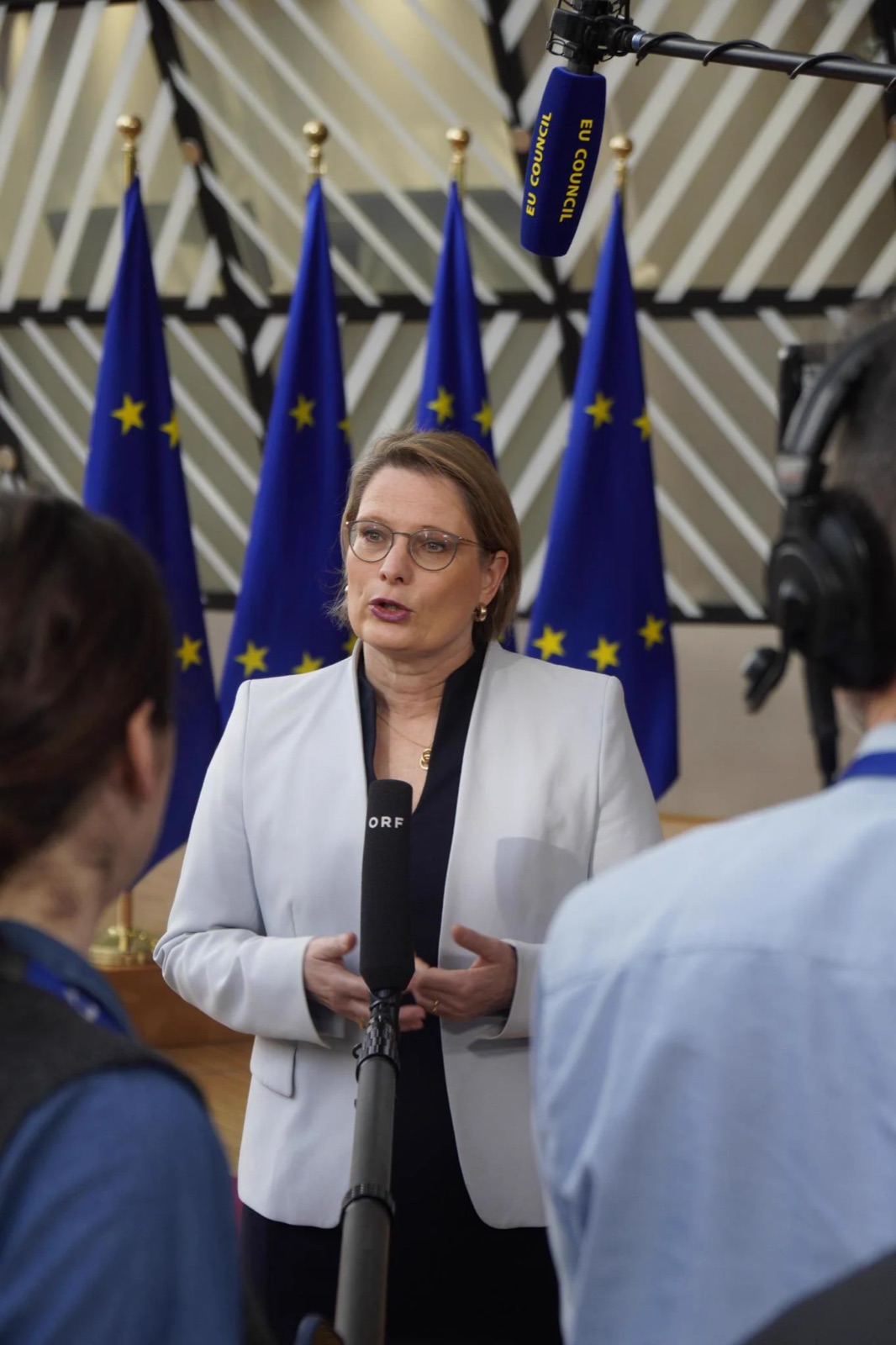
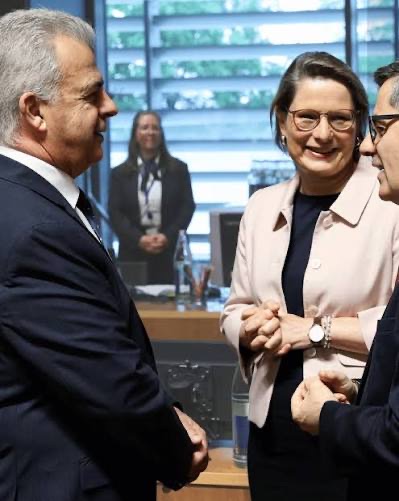
- EU justice ministers meet several times a year to adopt legislation on civil and criminal justice cooperation. Germany is represented by the federal justice minister or a deputy.
- European Commission
- On 17 July 2025 Hubig received EU Justice Commissioner Michael McGrath for his inaugural visit to Berlin; she said Germany too must keep strengthening its independent judiciary.
- Eurojust
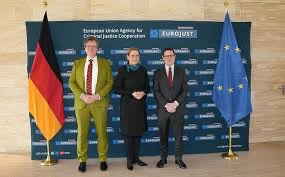
- The EU agency for criminal-justice cooperation in The Hague, coordinating cross-border investigations.
- International courts in The Hague
- On 5–6 February 2026 Hubig visited the International Criminal Court, Eurojust, the Kosovo Specialist Chambers, the International Court of Justice and the Register of Damage for Ukraine. She described international law as an achievement of humanity and said no state stands outside the law.
- Court of Justice of the EU
- Its rulings set the limits of national law — most visibly on data retention.
- Council of Europe
- Strasbourg-based organisation of 46 states, home to the European Court of Human Rights and the Parliamentary Assembly.
EU law in German statutes, 2025–2026
Directives transposed
- Directive (EU) 2023/2673 — withdrawal button and financial services at a distance; applies from 19 June 2026.
- Directive (EU) 2024/825 — empowering consumers for the green transition; green-claims rules from 27 September 2026.
- Directive (EU) 2024/1799 — right to repair; adopted June/July 2026.
- Directive (EU) 2024/2853 — product liability including software; deadline 9 December 2026.
The planned EU Digital Fairness Act on manipulative design and the CJEU’s case law on data retention are the main pending European questions for the ministry.
Sources
- BMJV press release, inaugural visit of Commissioner McGrath, 17 July 2025 — bmjv.de
- BMJV press release, visit to The Hague, 5 February 2026 — bmjv.de; Eurojust agenda entry
- Council of the EU, JHA Council meetings 2025–2026 — consilium.europa.eu
- Official Journal of the EU, Directives 2023/2673, 2024/825, 2024/1799, 2024/2853
Hubig’s personal attendance at individual JHA Council meetings could not be confirmed and is therefore not listed by date.